
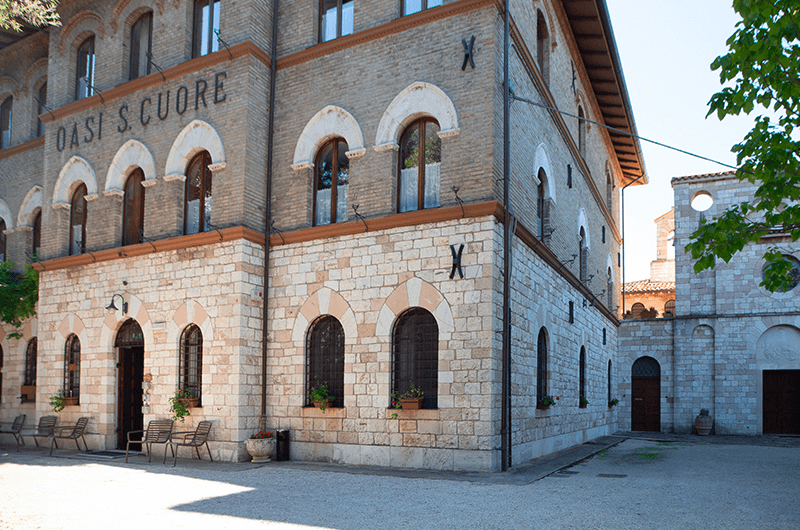
Oasi del Sacro Cuore in Assisi, the location of CampFI Italy
FAQ
(disclosure: compiled with the help of Chat GPT)
Where will CampFI Italy be held?
CampFI Spain will be held in Assisi, Italy at Oasi del Sacro Cuore.
Do I need a passport to go to Italy?
Yes — if you are a U.S. citizen traveling to Italy, you do need a valid U.S. passport to enter. (Travel.gov)
Here are the key points you should check:
- Your passport must be valid when you arrive in Italy. (Travel.gov)
- For entry in the Schengen Area (which includes Italy), your passport should generally be valid for at least 3 months beyond the date you plan to leave the Schengen Area. (Ministry of Foreign Affairs)
- The passport should have been issued within the last 10 years. (Insurte)
- U.S. citizens traveling for tourism or business and staying up to 90 days in a 180-day period do not need a visa. (Italoblog)
Since you’re attending CampFI Assisi in Italy at Oasi Sacro Cuore, make sure your passport meets those requirements — and it’s smart to check your airline’s requirements too, as some may ask for a longer validity (e.g., 6 months).
Do I need a visa to go to Italy?
If you are a U.S. citizen traveling to Italy for less than 90 days (for tourism, business, or events like CampFI Assisi), you do not need a visa. 🇮🇹✈️
How to get to Assisi from the United States?
If you’re already in Europe, congratulations! You can skip ahead 😊
Here’s a good, straightforward route from the U.S. East Coast to Assisi, Italy — including the easiest/most practical airports and connections — so you can plan your travel to the venue at Oasi Sacro Cuore smoothly.
1. Fly from the U.S. to a major Italian airport
Your best bet is to fly from a major East Coast airport (e.g., New York (NYC), Washington D.C., Boston) into a major Italian hub.
- Fly into Rome Fiumicino Airport (FCO) or Rome Ciampino Airport (CIA) — these are the closest large international airports for reaching Assisi with convenient onward travel. (KAYAK)
- Once landed in Rome, you’ll proceed onward to Assisi (see next section).
2. Travel from Rome to Assisi
From Rome, reach Assisi either by train or bus (train is typically faster and more comfortable).
- There are direct or mostly direct trains from Roma Termini station in Rome to Assisi railway station. The journey can take about 1 h 50 m to 3 h depending on the service. (ItaliaRail)
- Bus is an option, but it takes longer (for example ~6-7 hours) and may be less convenient. (FlixBus)
- So once you arrive in Rome, catch the train to Assisi. From the Assisi station to the town or to Oasi Sacro Cuore you’ll arrange a short taxi, shuttle or local bus.
3. Alternative: Fly into a closer regional airport
If you prefer fewer transfers, you can consider flying into a smaller regional airport near Assisi:
- The airport is Perugia San Francesco d’Assisi Airport (PEG) — relatively close to Assisi. (Travelmath)
- However: there are fewer long-haul / trans-Atlantic flights to Perugia, so you’ll likely still need to connect via another Italian or European hub.
- For ease, most travelers still fly into Rome and then train/bus up to Assisi.
How do I get to Italy by ship?
You can get to Italy by ship from the U.S., most commonly on trans-Atlantic or repositioning cruises that end in an Italian port such as Civitavecchia (Rome), Genoa or Venice. Below I’ll explain the most practical options, real-world examples, how long it takes, what to expect when you arrive, and the pros/cons so you can decide if it’s right for your CampFI trip to Assisi.
1) How people actually do it (the usual routes)
- Trans-Atlantic / repositioning cruises — cruise lines run seasonal “eastbound” sailings that cross the Atlantic and finish in Mediterranean ports (many list Civitavecchia → Rome as a destination). These typically depart U.S. ports (Florida, sometimes New York) or start in Europe and finish in the U.S. depending on the itinerary. Typical cruise lengths to Italy are ~10–20+ days depending on routing and stops. Celebrity Cruises+1
- Liner/expedition crossings — rare, more expensive, sometimes offered by specialty lines (Viking, Holland America, etc.) as combined Atlantic-crossing + Mediterranean itineraries. These are marketed as “Atlantic crossing” or “Atlantic + Mediterranean” voyages. Viking Cruises+1
Real examples: Celebrity, Royal Caribbean, MSC, Viking and Holland America all list transatlantic/repositioning cruises that call at or depart from Civitavecchia (Rome) in 2025–2026. Prices and durations vary by ship and date. Celebrity Cruises+2Royal Caribbean+2
2) Typical schedule & travel time
Ship time: plan on about 10–16+ days (some itineraries shorter/longer) for a U.S. → Italy crossing. Repositioning cruises often include island stops (Bermuda, Canary Islands, Azores) and several sea days. Royal Caribbean+1
Onward travel to Assisi: most ships dock at Civitavecchia (the cruise port for Rome). From Civitavecchia you can:
Take a train or shuttle to Roma Termini (~1–1.5 hours), then a train from Roma Termini to Assisi (fastest trains ~2–2.5 hours). Total transfer time Civitavecchia → Assisi is typically ~3–4 hours depending on connections. sitbusshuttle.com+1
3) Cost — what to expect
Cruise fares for repositioning/transatlantic sailings vary widely. You can sometimes find bargain fares on repositioning sailings (examples show fares from a few hundred euros for promotional cabins up to €1,000+ depending on ship and cabin type). Example listings for Rome↔Fort Lauderdale crossings show fares in the range of ~€800–€1,500 on some sailings — but prices depend on season, ship, and cabin. seascanner.com+1
Add costs for transfers from the arrival port to Assisi (train or private transfer), any pre/post nights in Rome, and travel insurance.
How do I get to Assisi by train, bus or car from other cities in Italy?
By Train (Most Recommended)
Train is usually the best and easiest way to reach Assisi — comfortable, scenic, and affordable.By train, bus or car, here are your options for getting to Assisi from
From Rome (by train)
- Route: Roma Termini → Assisi (via Foligno)
- Time: about 2–3 hours, depending on train type.
- Train Types: Regional (Regionale) or Intercity trains — you may have to change once at Foligno.
- How:
- Take a Trenitalia train from Roma Termini to Foligno.
- Then transfer to a local regional train to Assisi.
- Tip: When you arrive at Assisi station (actually in Santa Maria degli Angeli), take a bus or taxi (10–15 min) up to the old town or Oasi Sacro Cuore.
From Florence (by train)
- Route: Firenze S.M. Novella → Assisi (via Terontola or Perugia)
- Time: around 2.5–3 hours
- Details:
- Board a regional train toward Terontola-Cortona.
- Change there for a train to Assisi.
- Beautiful countryside views through Tuscany and Umbria!
From Perugia (by train)
- Route: Perugia → Assisi
- Time: about 25–30 minutes
- Details: Frequent local trains make this short, easy trip.
Alternative: Buses also connect Perugia and Assisi directly.
From Pisa (by train)
- Route: Pisa Centrale → Florence → Assisi
- Time: about 3.5–4.5 hours
- Details: Change trains in Firenze S.M. Novella and follow the Florence route above.
From Milan (by train)
- Route: Milano Centrale → Florence → Assisi
- Time: around 5–6 hours
- Details: Take a high-speed train (Frecciarossa or Italo) from Milan to Florence, then transfer to a regional train to Assisi.
From Venice (by train)
- Route: Venezia S. Lucia → Florence → Assisi
- Time: 5.5–6.5 hours
- Details: High-speed train to Florence, then regional to Assisi.
By Bus
Bus travel in Italy can be cheaper but is usually slower than trains.
- Companies: FlixBus, MarinoBus, and Sulga operate services to Assisi.
- From Rome: FlixBus offers direct buses from Roma Tiburtina to Assisi (Santa Maria degli Angeli) in about 5–6 hours.
- From Perugia: Local buses run frequently and take around 45 minutes.
- From Florence or Milan: Long-distance buses available (6–9 hours).
Tip: The main bus stop is in Santa Maria degli Angeli, near the train station.
By Car
Driving gives you flexibility — especially if you want to explore Umbria and Tuscany.
- From Rome: About 2.5 hours (180 km) via the A1 (Autostrada del Sole) north to Orte, then E45 to Assisi.
- From Florence: Around 2 hours (170 km) via A1 south to Valdichiana exit, then E45 to Assisi.
- From Perugia: Only 30 minutes (25 km) via SS75.
- From Pisa or Milan: About 4–5 hours, following A1 and E45 routes.
Parking tip: The old town is mostly pedestrianized. Use the Matteotti or Giovanni Paolo II car parks and take a shuttle or walk into town.
What tips do you have for adjusting to the time zone to minimize jet lag?
Here are a few things that may help with adjusting to the time zone before CampFI
- Before departure, try timing your sleep and mealtimes with that of Italy a few days before departure
- Consider taking a daytime flight instead of an overnight flight
- Stay hydrated
- Limit caffeine and alcohol
- When you land, don’t nap—stay awake until the sun sets
- Get outside and walking as much as possible on the day of arrival
Should I get Euros before I travel to Italy?
Yes, it’s a good idea to have some euros on hand before you travel to Italy, but you don’t need to overdo it. Here’s a breakdown:
Why to get euros in advance:
- Immediate expenses on arrival: Airport transfers, taxis, small snacks, or tips may require cash.
- Better rates than airport exchanges: Currency exchange at your local bank or online before departure usually gives a better rate than airports or tourist spots.
How much to get:
- Enough for the first day or two (roughly €100–€200 per person, depending on your plans).
Alternatives:
- ATM withdrawals in Italy: Often give a good exchange rate; check with your bank about fees.
- Credit/debit cards: Widely accepted in cities and larger towns. Carrying a little cash is still smart for markets, small shops, or rural areas.
💡 Tip: Notify your bank of your travel dates to avoid card blocks, and consider a card with no foreign transaction fees.
There are a couple fees you should be aware of when using your bank card at ATMs in Europe. First is the fee for using a bank that is not yours and second is, the foreign transaction fee. Not every bank adds both fees. Be sure to check with your bank before you travel what fees they will charge. Even if your bank does not charge either of these fees, the bank where you are withdrawing money in Europe probably will. You will usually pay lower fees if you use an ATM at an actual bank rather than one from a company like Travelex or Euronet. If you have a Charles Schwab debit card, the bank will reimburse you for any foreign ATM fees.
What do I need to know about using my credit cards in Italy?
Travel with a debit card with VISA or MasterCard logo if you plan to take out cash at an ATM. For credit card purchases, also ensure that you take a VISA or MasterCard branded card. Most businesses will not take American Express or Discover. Make sure your credit cards are enabled for contactless payments or chip and PIN payments, and you know your PIN. Most EU terminals do not take swipe cards anymore.
Alert your bank and credit card companies that you will be traveling. Not all credit cards require this, but it will not hurt to call and let them know that you will be traveling especially if you do not normally travel internationally. Banks can be quick to freeze a card when it looks like there’s suspicious activity.
Additionally, check to see what kind of fees your credit card might charge for international use. Some cards charge up to 3% while others do not charge any fees.
Is tipping normal in Italy?
Tipping is not required; however, it is appreciated to thank staff for good service. The amount you tip depends on the type of establishment and service.
- Restaurants: Some restaurants expect a 10% tip, but others may include a service charge on the bill, which is indicated by “servicio incluido”. If the service was excellent, you can add an additional 5–10% tip in addition to the service charge.
- Cafés, coffee shops, and bars: Tipping is not required for coffee and drinks.
- Taxi drivers: drivers don’t expect a tip, but you can round up if you want.
- Hotels: It’s common to tip the porter, either with a euro per piece of luggage or 2–3 euros per day.
- Other places: Tipping is also appreciated in other places where staff may not be well compensated, such as spas, salons, and serviced apartments.
Anything to keep in mind regarding safety?
Yes! Italy is generally very safe for tourists, and Assisi in particular is a quiet, small town, but it’s smart to be aware of a few safety considerations:
1. Petty Theft / Pickpocketing
- Most common in tourist areas, buses, train stations, and crowded streets.
- Keep your wallet, passport, and phone secure in a zippered bag or money belt.
- Avoid carrying large amounts of cash.
2. Travel & Transportation Safety
- Driving: Italian roads can be narrow and challenging, especially in hill towns like Assisi. Pay attention to traffic signs and ZTL (limited traffic) zones.
- Public transport: Buses and trains are generally safe, but be vigilant with luggage.
3. Health & Medical
- Bring any necessary medications; pharmacies in small towns may have limited stock.
- Travel insurance is recommended in case of illness or minor accidents.
4. Cultural & Local Norms
- Dress modestly if visiting religious sites (e.g., St. Francis Basilica in Assisi).
- Be polite and patient; Italian locals appreciate courtesy.
5. Emergency Contacts
- U.S. Embassy in Italy: +39 06 4674 1
- Local emergency numbers: 112 (general), 118 (medical), 113 (police)
Cultural things to keep in mind?
When visiting Assisi, a historic and religious town in Italy, there are some cultural norms and etiquette tips that will help you show respect and enjoy your trip:
1. Religious Respect
- Assisi is the birthplace of St. Francis, and many visitors come for pilgrimage or to visit churches and basilicas.
- Dress modestly: shoulders and knees should be covered in religious sites.
- Keep voices low inside churches, and avoid taking photos where prohibited.
2. Greetings & Politeness
- Italians are formal and polite: a simple “Buongiorno” (good morning) or “Buonasera” (good evening) goes a long way.
- Shake hands when meeting someone new; kisses on both cheeks are usually reserved for friends and family.
3. Dining Etiquette
- Meals are a relaxed, social experience, not rushed.
- Don’t expect coffee orders to be the same as in the U.S.—espresso is the standard, and cappuccino is usually only drunk in the morning.
- Tipping is modest; rounding up or leaving 5–10% is enough.
4. Pace & Public Behavior
- Life in Assisi is slower and quieter than big cities. Loud behavior or rushing can feel out of place.
- Respect lines and wait your turn in shops, restaurants, and at transport hubs.
5. Photography & Privacy
- Always ask before photographing people, especially locals or monks.
- Avoid flash photography in sacred spaces.
6. Cash & Payments
- Many small shops and cafes prefer cash, so carry some euros.
- Credit cards are accepted in larger establishments, but not everywhere.
7. Respect for Historic Sites
Stick to marked paths in churches, gardens, and ruins.
Don’t touch ancient frescoes or artifacts.
Is the tap water safe to drink and readily available?
Yes, tap water in Italy is generally safe to drink, including in Assisi. Most towns and cities, especially in central and northern Italy, have clean, regulated municipal water.
Here are a few tips:
- Check locally: Some older buildings may have plumbing that affects taste, but it’s usually safe.
- Bottled water: Many Italians still buy bottled water because they prefer the taste or because sparkling water is common.
- Fountains: Public drinking fountains (“nasoni”) in cities like Rome are safe to drink from, though Assisi has fewer of these.
💡 Tip: Bring a reusable water bottle—you can refill it easily, and it’s environmentally friendly.
Must I have a return or onward travel ticket to travel to Italy?
Yes, as a U.S. citizen traveling to Italy for tourism, you are generally expected to have a return or onward travel ticket. Here’s why:
- Schengen entry requirements: Italy is part of the Schengen Area, which allows U.S. citizens to stay up to 90 days within a 180-day period without a visa for tourism.
- Proof of onward travel: Border officials may ask for a plane, train, or bus ticket leaving Italy or the Schengen Area to ensure you won’t overstay.
Tips:
- Print or have an electronic copy of your ticket readily available.
- If you have a flexible itinerary (e.g., traveling by train to another country), make sure you can show proof of your onward travel from Italy or the Schengen Area.
It’s not always checked, but not having proof can delay entry or raise questions, so it’s safest to have one. ** Last year in Spain, I was not ever asked for documentation. Not sure how many others of the group actually had to show an onward travel document.
I plan to spend some extra time in Europe before / after Camp FI Italy. Do I need to consider Schengen limits?
If you are not an EU citizen, you will need to understand the number of days you can stay in Europe based upon what passport and visas you may hold.
Check with your State Department to understand your stay limits.
For example, Canadian and US citizens can stay in the Schengen Area for up to 90 days within a 180-day period without a visa. This applies to tourism, business, or transit. The 90 days can be cumulative, so it’s not necessary to stay for 90 consecutive days. If you leave the Schengen Area and return within the 180-day period, your previous stay will count towards the 90 days
Will Camp FI Italy follow a similar format as previous camps?
Yes, with the exception that it will be one day longer. Rather than 3 nights and 2 ½ days of activities, CampFI Italy will include 4 nights and 3 ½ days of activities. Similar to other camps, we will have speakers, breakout sessions, leisure time, and fun activities.
What will the accommodations be like at CampFI Italy?
All rooms will have their own private bathroom, simple furnishings, heating, and WiFi.
What clothes should I plan to bring to Camp FI Italy?
Casual clothing is suitable though dressing up a little bit (dark jeans or hiking pants, plain black or white shirt) will help reduce your chances of being identified as a tourist and target of potential pick pocketers. Pack layers, including a light waterproof jacket or umbrella, to stay comfortable during potential rain showers.
What footwear should I bring?
Sneakers used to be a telltale signature for North American tourists. Not anymore. Sneakers, trail runners, and hiking shoes are the norm in Assisi. Be sure to bring comfortable shoes suitable for walking on cobblestones and uneven streets.
What will the weather be like in Assisi during Camp FI Italy?
Assisi, Italy should be mild spring weather in late April. HIgh temperatures will be around 60 and low temperatures will be around the upper 40’s. Obviously, as the time nears, we will monitor the weather and pack accordingly.
Will my cell phone work in Italy?
Check with your carrier and your plan details. Be sure to understand how you will be charged for using your phone abroad. What is your data roaming plan, do you get free EU roaming, or charged a daily fee, or have to pay per megabyte? Paying per MB is almost always crazy expensive.
If your plan provides coverage in Italy but you plan to stay more than a few days, it likely will be worthwhile to get an additional SIM (or eSIM) that would provide you cheaper local coverage. Typically, a SIM will cost $30-50 for a month of data and local calls. A common source for purchasing eSIMs prior to travel is AIRALO.
How should I transport my medications?
Pack your medicine in your carry-on. Keep your medication in original containers. Do not combine multiple medications into one container. Make sure your prescription medication is clearly labeled with your full name, your healthcare provider’s name, the generic/brand name, and the exact dosage.
Bring documentation of all written prescriptions, including the generic names for medicines. You can also consider bringing information on your diagnosis or a copy of your medical history in Italian and English. If you use controlled substances or injectable medicines, you can ask your prescribing healthcare provider for a note. If you need refrigeration for medicine, please inform the meeting organizer so that refrigeration can be secured for you.
How do I prepare in advance for electrical connections?
Traveling from the U.S. to Italy requires a bit of prep for electrical devices because the standards are different. Here’s a detailed guide:
1. Voltage Difference
- Italy: 230 volts, 50 Hz AC
- U.S.: 120 volts, 60 Hz AC
- Implication: Most U.S. devices are not compatible with Italian outlets unless they are dual voltage.
Check your device: Look for a label like:
Input: 100-240V ~ 50/60Hz
If it says this, it’s dual voltage and can be used in Italy with just a plug adapter.
2. Plug Type
- Italy uses Type C, F, and L plugs (two or three round prongs).
- U.S. plugs (Type A or B, flat prongs) will not fit.
Solution: Get a plug adapter—these are widely available online or in travel stores.
3. Converters & Transformers
- For non-dual voltage devices (like some hair dryers or curling irons), you’ll need a voltage converter to step down from 230V to 120V.
- Dual voltage devices do not need a converter, only the plug adapter.
4. Practical Tips
- Bring a multi-port USB charger: Many hotels have limited outlets.
- Consider a travel power strip if you have multiple devices.
- Always check wattage limits on converters to avoid overheating.
💡 Quick Checklist for Italy:
Consider portable chargers for convenience.
Identify which devices are dual voltage.
Pack plug adapters (Type C, F, or L).
Bring voltage converters only for single-voltage appliances.
Do I need to know Italian?
No, you don’t need to know Italian to travel in Italy, but knowing a few basics can make your trip smoother and more enjoyable. Here’s a breakdown:
1. English is fairly common in tourist areas
- In Assisi, restaurants, hotels, and major attractions often have English-speaking staff.
- Signs and menus may include English, but smaller shops or rural areas may only have Italian.
2. Helpful Italian phrases
Knowing a few polite phrases goes a long way:
| English | Italian |
|---|---|
| Hello / Good morning | Buongiorno |
| Good evening | Buonasera |
| Please | Per favore |
| Thank you | Grazie |
| Excuse me / Sorry | Scusi |
| Do you speak English? | Parla inglese? |
| How much is this? | Quanto costa? |
| Where is …? | Dov’è …? |
Even trying basic phrases shows respect and is appreciated by locals.
3. Translation tools
- Google Translate or similar apps work well offline if you download Italian language packs.
- Camera translation (for menus or signs) is very handy in towns like Assisi.
💡 Tip: For Assisi, which is a small, tourist-friendly town, English is usually sufficient for day-to-day activities, but learning greetings and basic phrases will make interactions warmer and more enjoyable.
.
Should I rent a car?
Renting a car during a short stay in Assisi, Italy, is generally unnecessary and may even be more of a hassle than it’s worth.
🚶♂️ Getting Around Assisi Without a Car
Assisi is a compact, pedestrian-friendly town with a well-connected public transportation system. The local bus network includes three main lines (A, B, and C) that run every 20–30 minutes, connecting the city center to the outskirts assisionline.com. Line C is particularly useful for travelers, as it links the Assisi train station in Santa Maria degli Angeli to the historic center. Tickets cost approximately €1.50 and can be purchased at tabaccherie (tobacco shops), newsstands, or directly from the bus driver TourismAttractions.
The town’s steep, cobbled streets can be challenging, but the public transit system, combined with walking, makes it manageable. For example, the Line C bus stops near major attractions like the Basilica of Saint Francis of Assisi and Piazza del Comune TourismAttractions.
🚗 Renting a Car in Assisi
While renting a car is possible, it’s not ideal for exploring Assisi itself. There are no rental agencies directly in Assisi; the nearest options are in Santa Maria degli Angeli or Perugia Tripadvisor. Additionally, parking in Assisi’s historic center is limited, and navigating the narrow, hilly streets can be challenging.
If you’re planning to visit nearby towns in Umbria, such as Spello or Perugia, a rental car might be more convenient. However, for a short stay focused on Assisi, public transportation should suffice.
✅ Recommendation
For a few days in Assisi, it’s advisable to rely on public transportation and walking. This approach allows you to fully immerse yourself in the town’s charm without the added stress of driving and parking. If you plan to explore the broader Umbria region, consider renting a car for those specific excursions.
Do I need travel insurance?
Purchasing travel insurance is a personal decision. First, understand the difference between travel insurance, health insurance while traveling, and expatriation insurance when one is traveling.
Check with your health insurance plan to see if it covers you for health care services overseas and if you’ll be in or out of network if you need to get care. Check with your credit cards to see what kind of trip insurance coverage and expatriation insurance is included with purchase of airfare.
Do you have any other general travel tips?
- Pack light: Most airlines inside Europe allow one single suitcase per passenger, and either one or two carry-on bags. Smaller is better, as hotel rooms are small and if you are travelling by train, you want to be able to carry your own luggage without trouble.
- Farmacias are common and readily available like in any medium or larger city in the US
- In case you are sharing a room, you may want to bring earplugs and eye mask